Downloads
DOI:
https://doi.org/10.47982/overholland.2025.23.254Abstract
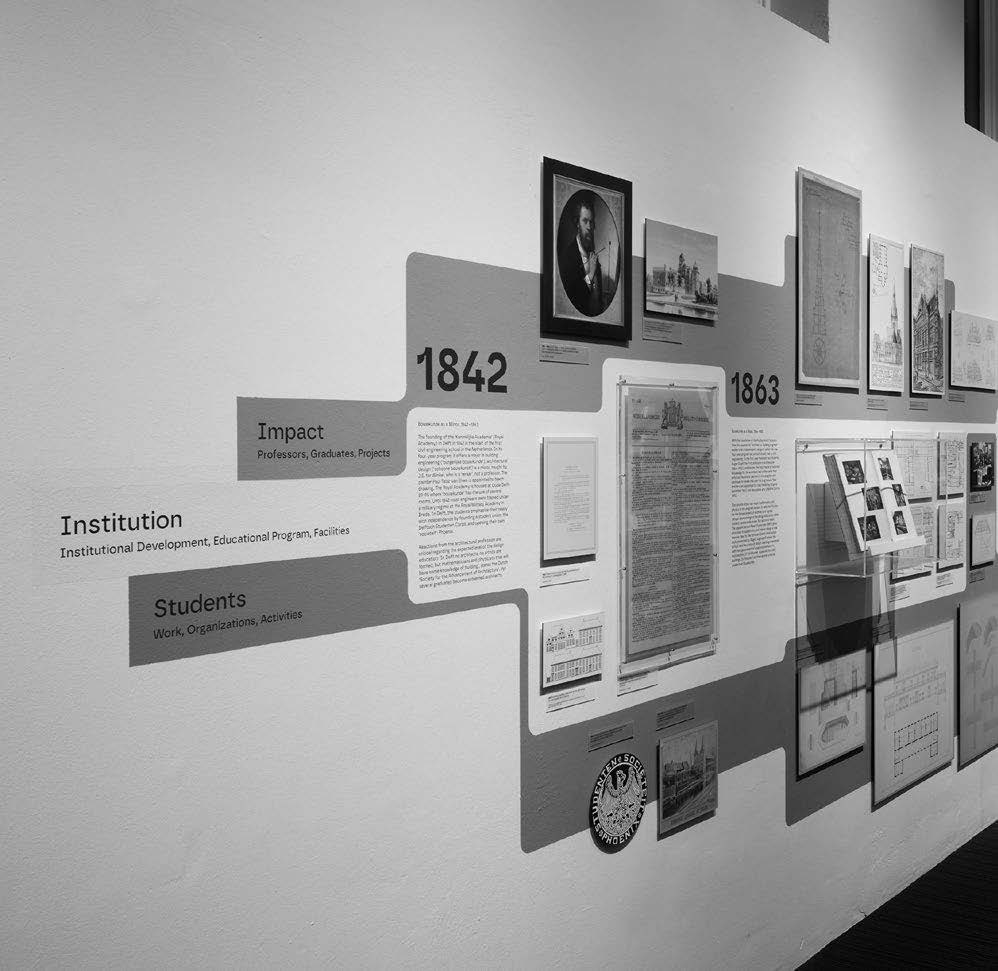
This article examines the historical development and intellectual profile of architectural education in Delft, with particular attention to the shifting relationship between architecture, engineering, history, and design. Focusing on the Faculty of Architecture and the Built Environment at Delft University of Technology, it traces how architectural education evolved from a technically oriented discipline into a complex field in which design, historical knowledge, theory, and societal engagement are increasingly intertwined.
The article situates this evolution within broader changes in Dutch higher education and professional practice. It discusses how early Delft education emphasised construction, structural logic, and material knowledge, while gradually incorporating architectural history, urbanism, and cultural reflection. At the same time, it highlights persistent tensions between design-driven curricula and historically oriented research, particularly regarding the position of architectural history within a predominantly technical university.
Special attention is paid to the institutional and pedagogical consequences of this imbalance. The article argues that the marginalisation of historical research and education weakens both architectural practice and heritage care, as designers risk losing awareness of the historical depth and cultural significance of the built environment. International comparisons demonstrate that architectural programmes elsewhere often integrate historical scholarship more structurally into architectural training.
Ultimately, the article advocates a renewed appreciation of architectural history as an essential component of architectural education in Delft. Rather than viewing history as an auxiliary discipline, it should be recognised as a critical resource for understanding spatial challenges, informing design decisions, and strengthening the societal relevance of architecture. The future of architectural education, the article concludes, depends on a balanced integration of design, technology, and historical knowledge.
How to Cite
Published
Issue
Section
License
Copyright (c) 2026 Aart Oxenaar, Jesse Verdoes

This work is licensed under a Creative Commons Attribution 4.0 International License.