Dilemmas in the care of cultural heritage
Downloads
DOI:
https://doi.org/10.47982/overholland.2025.23.251Abstract
This article examines contemporary dilemmas in the care and interpretation of cultural heritage through the lens of “guilty” or contested historical artefacts. Using literary analysis, architectural theory, and recent public debates, it explores how cultural objects and sites become morally charged when their origins or historical associations conflict with present-day values. The discussion opens with Andrew O’Hagan’s novel Caledonian Road, in which an art historian publicly dismantles the authority of the British Museum’s Enlightenment Gallery, exposing colonial plunder and aesthetic fabrication beneath its celebrated displays. This fictional episode serves as a point of departure for reflecting on real-world heritage practices, including institutional strategies of contextualisation and reputation management.
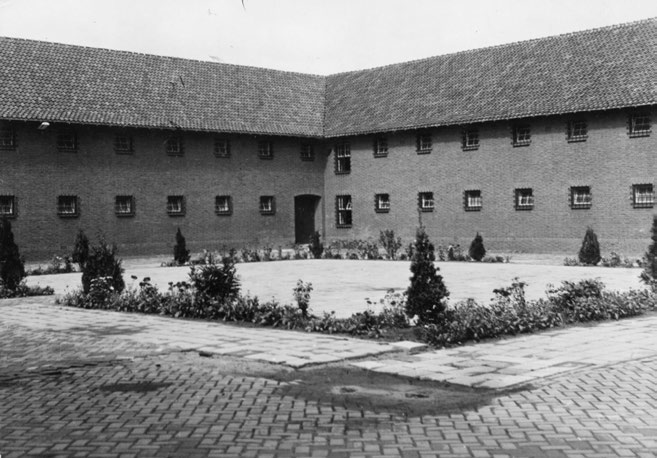
The article situates these issues within broader heritage theory, drawing on the Venice Charter and the concept of the historic urban landscape, while also addressing critiques that argue the notion of “heritage” has become overstretched and analytically problematic. Through case studies such as De Bazel’s former headquarters of the Nederlandsche Handelmaatschappij in Amsterdam and the former SS prison at Camp Vught, the article demonstrates how buildings can become permanently tainted by the “lived time” of colonial exploitation, war, and violence.
Particular attention is paid to the tension between lived historical experience and contemporary “experienced time,” shaped by consumer culture, commemorative practices, and demands for authenticity. The article argues that attempts to neutralise, erase, or sanitise difficult histories often reveal deeper societal discomfort rather than offering genuine ethical resolution. Ultimately, it contends that responsible heritage care requires sustained engagement with historical context, moral ambiguity, and emotional complexity, rather than reliance on aesthetic appreciation or curatorial framing alone.
How to Cite
Published
Issue
Section
License
Copyright (c) 2026 Bernard Colenbrander

This work is licensed under a Creative Commons Attribution 4.0 International License.